
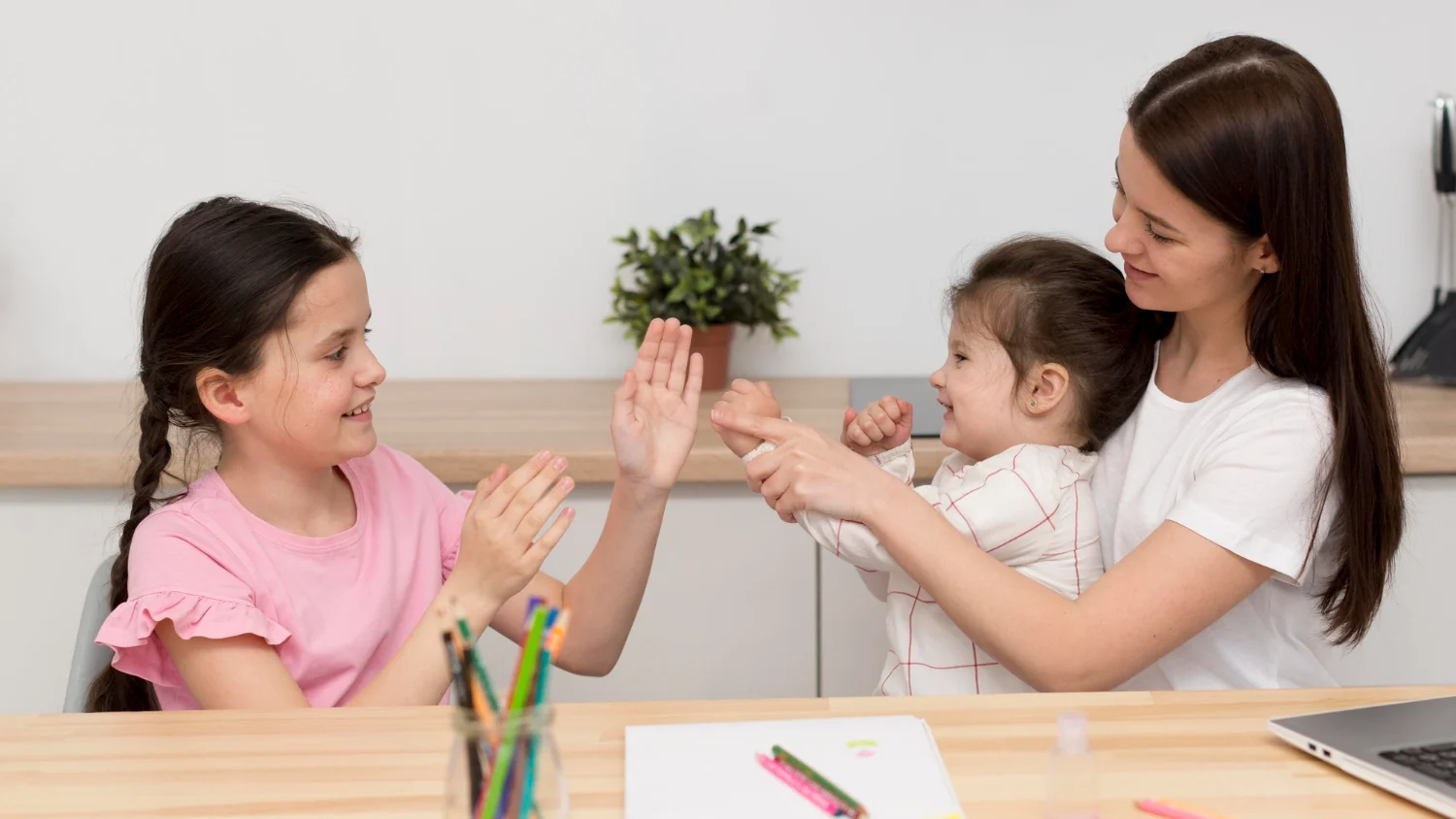
Every child deserves to feel safe, respected, and confident in their interactions with others. For many children with ASD, social boundaries don’t always come naturally. It can be challenging to understand when to say “no,” how close to stand to someone, when to take turns, or how to interpret social cues that others seem to grasp instinctively. These difficulties aren’t a lack of desire to connect — they’re often a matter of needing clearer structure, more support, and a compassionate way to learn.
At RightWay ABA, the goal is always to help children thrive. That doesn’t just mean learning academic skills or reducing challenging behaviors — it means helping them build real-world abilities that allow them to form meaningful and safe relationships. Social boundaries are a core part of that journey, and ABA therapy provides the supportive, step-by-step guidance children need to understand and practice these skills in everyday life.
Understanding Social Boundaries Through the Child’s Eyes
To support a child in developing positive boundaries, we first have to understand what boundaries feel like for them. Many children with ASD experience the world in ways that can make social interactions overwhelming or unpredictable. They may:
- Struggle to read another person’s tone or body language
- Miss subtle cues that a peer needs space
- Feel unsure of how to decline unwanted interactions
- Act impulsively when excited
- Withdraw completely when overstimulated
RightWay ABA recognizes that behavior is communication. Instead of expecting children to navigate complex social situations on their own, therapists help them build the foundational skills behind boundaries — understanding emotions, recognizing personal space, expressing needs clearly, and engaging with others at a pace that feels comfortable.
A Step-by-Step Approach That Makes Learning Feel Safe
One of the strengths of ABA therapy is its ability to take something abstract, like “respecting boundaries,” and turn it into clear, concrete steps a child can practice confidently. RightWay ABA focuses on breaking down difficult or confusing interactions into smaller skills that children can understand, repeat, and eventually use on their own.
For example, a therapist might start by helping a child identify what “comfortable” and “uncomfortable” interactions feel like. They may teach the child how to check in with themselves before approaching someone. They may support the child in practicing how to respond when someone says “no” or asks for space. These early steps create a foundation that makes more complex social situations easier to navigate later on.
Learning in familiar places also matters. Since RightWay ABA provides in-home ABA therapy, children practice these skills in settings where they feel safe — during everyday routines, with siblings, during playtime, or when interacting with family members. This makes generalization more natural, and learning becomes meaningful rather than theoretical.
Strengthening Communication for Clearer Boundaries
Positive social boundaries start with communication. When a child struggles to express what they want or don’t want, boundaries become blurred. RightWay ABA places a strong emphasis on teaching communication skills — whether it’s using words, gestures, or other forms of expression.
Children learn how to:
- Ask for space
- Request help when unsure
- Decline politely
- Share preferences
- Express when something feels “too much”
These communication tools give children a voice, allowing them not only to protect their own boundaries but also to understand and respect the boundaries of others.
Helping Children Understand Personal Space and Social Expectations
Children with ASD often benefit from explicit teaching around social expectations that others pick up naturally. RightWay ABA’s therapists use structured practice, modeling, and real-life routines to help children understand concepts like:
- How close is “too close”
- When physical touch is appropriate
- When to wait, take turns, or pause
- How to join or leave social interactions
- What it means to respect another person’s comfort
These skills are woven naturally into therapy sessions—during games, conversations, daily routines, and interactions with family members. By practicing in situations that matter to the child, the learning becomes intuitive rather than forced.
Building Emotional Regulation for Stronger Boundaries
Emotional regulation is another essential part of social boundaries, and it’s an area RightWay ABA emphasizes strongly. When children learn to recognize their own feelings, they can make more thoughtful choices about how to interact with others.
ABA helps children learn skills such as:
- Calming their body when overstimulated
- Identifying when they need a break
- Navigating disappointment without losing control
- Pausing before reacting
- Using coping strategies
- Handling unexpected changes
When a child feels in control of their emotions, boundaries become easier to maintain because they’re no longer battling sensory overload, anxiety, or frustration.
Parents and Siblings Play a Meaningful Role
RightWay ABA’s family-centered approach means that parents and siblings are not just observers — they’re partners in the process. Social boundaries happen in real life, not just in therapy sessions, so families receive guidance and support on how to model boundaries, reinforce new skills, and gently redirect challenging moments.
Siblings are included too. They often serve as the child’s first social partners, and RightWay ABA helps them understand how to support their brother or sister in a way that is patient, encouraging, and developmentally appropriate. This helps create a safe home environment where boundaries are practiced consistently.
The Circle of Communication Strengthens Social Learning
RightWay ABA’s “Circle of Communication” approach ensures that everyone involved in the child’s life — therapists, parents, teachers, technicians, and other providers — works together toward the same goals. This collaborative model makes boundary learning stronger and more consistent because the child receives the same messages and expectations across different environments.
The result? A child who doesn’t just learn boundaries in therapy, but uses them naturally at home, in school, and in the community.
Celebrating Meaningful Growth
Progress in social boundaries doesn’t always look dramatic. Instead, it often appears in quiet, powerful moments:
A child steps back when someone looks uncomfortable.
They say “no” instead of melting down.
They show patience during play.
They ask before touching or hugging.
They choose to walk away when overwhelmed.
They respect another child’s turn without prompting.
These moments might seem small to outsiders, but to families, they represent real independence, emotional maturity, and growing confidence.
RightWay ABA’s mission is to help families move from simply managing days to genuinely thriving — and growth in social boundaries is a profound part of that transformation.
Final Thoughts
Positive social boundaries are more than social rules — they’re essential life tools that help children feel safe, empowered, and connected. Through compassionate, structured, in-home ABA therapy, strong communication, family involvement, and continuous teamwork, RightWay ABA equips children with the skills they need to understand their own boundaries and respect the boundaries of others.
With patience, practice, and the RIGHT support, children learn not just how to interact, but how to connect — confidently, safely, and in a way that reflects who they truly are.


